





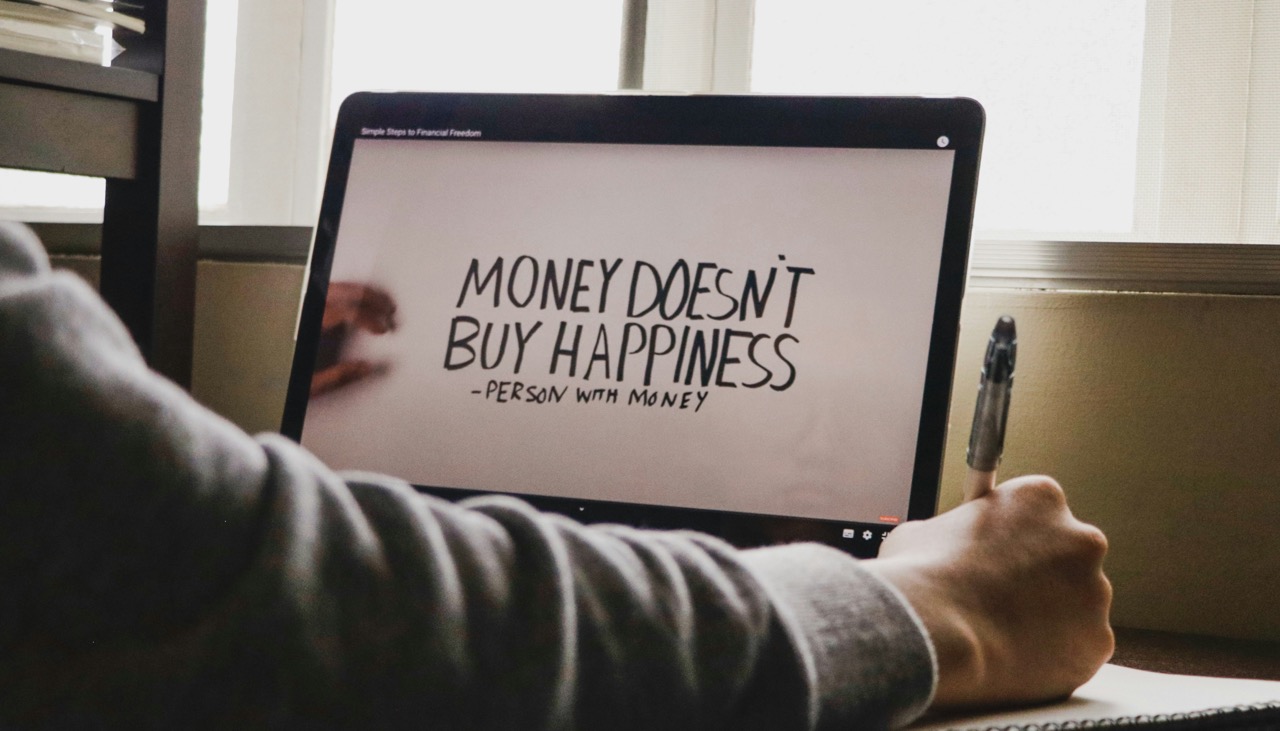
“Money can’t buy happiness” is one of those phrases that sounds hollow the moment you’re stressed about rent. If you’re choosing between groceries and a utility bill, hearing that platitude from someone who’s never had to make that choice can feel like an insult. So is the saying just something comfortable people repeat to make themselves feel better, or is there something real underneath it?
The honest answer is both things are true at once: money solves an enormous number of problems, and it genuinely cannot buy happiness. These aren’t contradictory once you separate what money actually does from what happiness actually is.
Money Removes Obstacles. It Doesn’t Manufacture Joy.
Think of money less as a happiness generator and more as a tool for removing friction. It can eliminate the constant background hum of worry about whether you’ll make rent, whether a medical emergency will bankrupt you, or whether your car breaking down means missing work. That’s enormous. Living without those worries is categorically better than living with them.
But removing a problem isn’t the same as creating happiness. Getting rid of a toothache feels great, but the absence of pain isn’t joy, it’s just neutral. Psychologists describe this as the difference between a baseline and an actual positive state. Once your needs are met, you’re not unhappy anymore, but you’re not automatically happy either. You’re just at zero instead of negative.
The Research Backs This Up, With a Twist
There’s a well-known finding, originally pointing to around $75,000 a year (in 2010 dollars), suggesting that emotional wellbeing keeps climbing with income up to that point, then levels off. More recent research has pushed that number higher, with some economists arguing the plateau is closer to $500,000 once methodology is corrected. Either way, the underlying pattern holds: money buys real, measurable increases in wellbeing while you’re climbing out of financial insecurity, and then the returns shrink dramatically.
This matters because it means the “money can’t buy happiness” crowd and the “but it solves so many problems” crowd are both right, they’re just talking about different parts of the curve. If you’re worried about your electric bill, more money will absolutely make you happier. If you already have millions and you get another million, it barely registers.
Why Comfort Has a Ceiling
Humans adapt to almost everything, a phenomenon researchers call hedonic adaptation, sometimes nicknamed the hedonic treadmill. You get a raise, feel great for a while, then your spending and expectations rise to match, and you’re back to roughly the same baseline mood you started with. The same happens with material purchases: a new car, a bigger house, a nicer phone. The novelty fades and you adjust to the new normal faster than you’d expect.
This is also why some lottery winners report feeling no happier, or even less happy, a year or two after their win. The money solved their immediate financial problems, then their brain simply moved the goalposts and found new things to be dissatisfied about.
What Happens When the Obstacles Are All Gone
There’s a pattern that comes up again and again in people who grew up with significant wealth, or who suddenly acquired a lot of it: a kind of emptiness that has nothing to do with money itself and everything to do with what money removes from a life. Specifically, it removes struggle, and struggle turns out to matter more than most people assume.
Think about playing a video game in god mode. Instantly winning every fight is satisfying for about ten minutes, and then it becomes boring, because difficulty is what gives accomplishment its meaning. People who never have to work for anything often lose the sense that their own effort matters, and without that, achievements stop feeling like achievements. This shows up as a real psychological pattern in some children of extreme wealth: a persistent sense of not having earned anything, shame about feeling unworthy of what they have, and in worse cases, addiction or self-destructive behavior as a way of generating some kind of internal stakes in a life where external stakes have been removed.
This isn’t a knock on wealthy people generally, plenty of people raised with money turn out grounded and content. But it’s a useful data point against the idea that removing every obstacle is the recipe for a good life. Total comfort, with nothing to push against, seems to create its own kind of malaise.
The Things Money Genuinely Can’t Touch
A few things keep surfacing as core ingredients of a happy life, and none of them are purchasable:
- A sense of purpose. Feeling like your effort matters and contributes to something.
- Genuine relationships. People who like you for reasons that have nothing to do with what you can do for them. Extreme wealth can actually make this harder, since it becomes difficult to tell who’s around because they like you and who’s around because of what you have.
- Health and the people you love being healthy. No amount of money stops grief when someone you love is sick or dying. It can pay for the best possible care, but it can’t prevent the loss.
- Working through your own psychology. Trauma, insecurity, and unresolved emotional patterns don’t dissolve because your bank balance grows. If anything, removing financial stress can make those underlying issues more visible, since they’re no longer hidden behind the more urgent problem of survival.
So Which Is It?
If you’re someone currently stressed about whether you can cover this month’s bills, the people telling you “money won’t make you happy” are technically right about the long-term picture but missing the point entirely about your present reality. Going from financial insecurity to financial stability is one of the most reliable ways to increase your day-to-day wellbeing that exists. It’s not even close.
But if you’re imagining that hitting some specific number, doubling your salary, or winning the lottery will hand you lasting contentment, the research and a lot of real human experience suggest otherwise. Past a certain point, the things that actually move the needle are the boring, unbuyable basics: people who care about you, work that feels meaningful, your health, and a sense that you’re growing rather than standing still.
Money is a tool for clearing obstacles out of your path. It’s a genuinely important tool, and anyone who tells you otherwise probably already has enough of it to forget what it’s like not to. But clearing the path and knowing where you actually want to walk are two different problems, and only one of them has a price tag.